
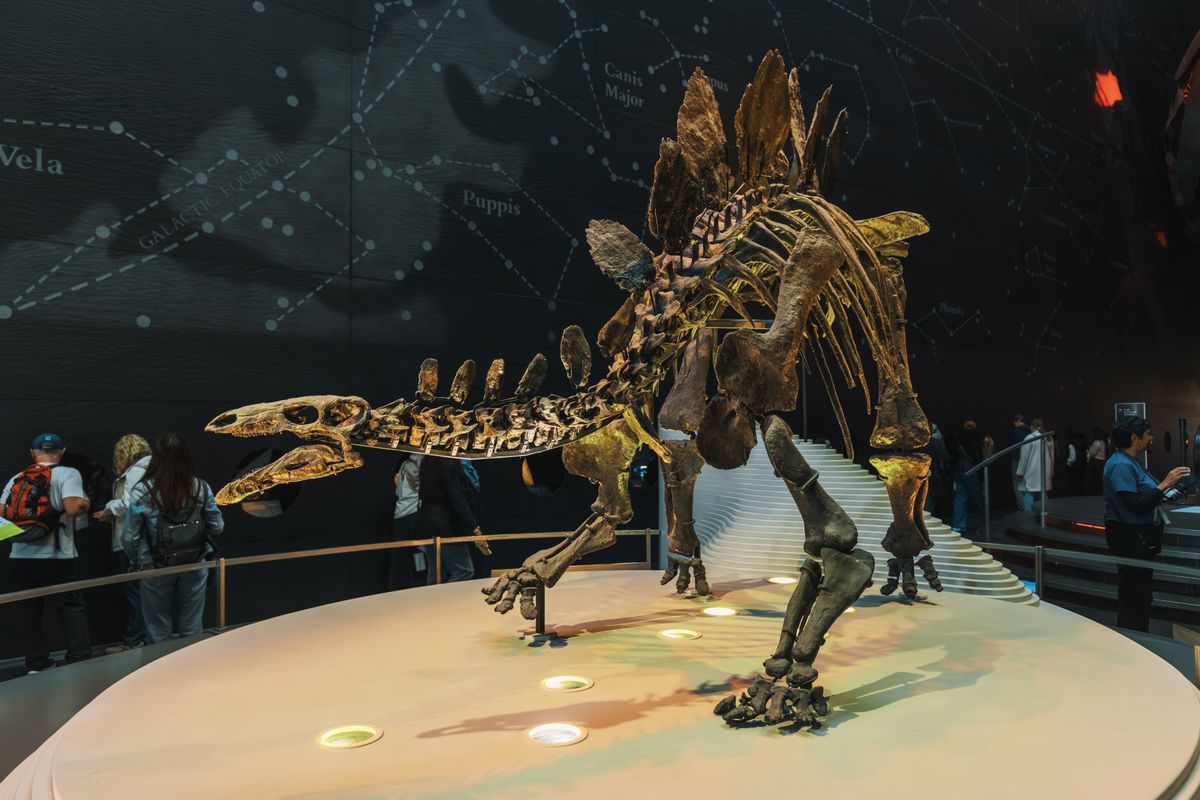
How Evolution Works: Natural Selection, Adaptation, and the Tree of Life
Evolution is the idea that all life on Earth is related, and that species change over time. It is the central, unifying theory of biology — the framework that explains why there are so many different kinds of living things, why they are distributed as they are, why they resemble each other in some ways and differ in others, and how the diversity of life came to be. It is also one of the most misunderstood ideas in science.
This guide explains how evolution works, in plain language. It covers what evolution is and what it is not, the mechanism of natural selection, the sources of variation, how new species form, the evidence for evolution, the history of life on Earth, and the misconceptions that persist despite more than a century and a half of research. It avoids inventing specific dates or figures, and marks any that would need verification.
What Evolution Is
Evolution is change in the heritable characteristics of a population over generations. The key words are “population” and “over generations”. Evolution does not happen to an individual during its lifetime. An individual giraffe does not grow a longer neck because it stretches to reach high leaves. What happens is that, in a population of giraffes, individuals with slightly longer necks tend to survive and reproduce more successfully, and over many generations the average neck length of the population increases. The individual does not evolve; the population does.
Evolution is also not a ladder, with simple organisms at the bottom and humans at the top. It is a branching tree. Every living thing is related to every other living thing, and the tree of life has many branches. Humans are one twig on one branch — the primates — and we share ancestors with every other species, near or distant. A bacterium is not a failed human; it is a successful organism in its own right, shaped by billions of years of evolution in its own environment.
Natural Selection: The Core Mechanism
Natural selection is the main mechanism of evolution, and it is simple enough to state in a few sentences. It has four ingredients.
1. Variation
Individuals in a population differ from each other. Some are taller, some are faster, some are more resistant to a disease, some have slightly different colouring. This variation is heritable: at least some of it is passed from parents to offspring, through genes.
2. Overproduction
Organisms produce more offspring than can possibly survive. A single oak tree produces thousands of acorns, but only a few become trees. A fish lays thousands of eggs, but only a few survive to adulthood. This means there is competition for resources — food, water, space, mates — and not every individual will reproduce.
3. Differential Survival and Reproduction
Because individuals differ, some are better suited to their environment than others. The better-suited individuals are more likely to survive and to reproduce, and to pass their characteristics to their offspring. This is natural selection: the environment “selects” which variants are passed on, not by conscious choice, but by the simple fact that some variants survive and reproduce better than others.
4. Accumulation Over Time
Over many generations, the favourable variants become more common in the population, and the population changes. Given enough time, the accumulated changes can be large: a population can split into two species, and a lineage can give rise to forms very different from its ancestors.
The phrase “survival of the fittest” is often used to describe natural selection, but it is misleading if it is taken to mean the strongest or the most aggressive. In evolution, “fit” means reproductively successful in a particular environment. Sometimes the fittest individual is the fastest; sometimes it is the best camouflaged; sometimes it is the one that cooperates best with others. Fitness is always relative to the environment, and when the environment changes, what counts as fit changes with it.
An Example: Antibiotic Resistance
Antibiotic resistance is natural selection in action, and it is happening now. When a bacterial population is exposed to an antibiotic, most bacteria die, but a few may carry a mutation that makes them resistant. Those resistant bacteria survive, multiply, and pass on their resistance. Over time, the population becomes resistant to the antibiotic. This is evolution by natural selection, observed in real time, and it is one of the reasons antibiotics must be used carefully: every use of an antibiotic is a selection event that favours resistant bacteria.
Where Variation Comes From
Natural selection needs variation to work on, and variation comes from two main sources: mutation and the shuffling of genes during reproduction.
Mutation
A mutation is a change in the DNA of an organism. Mutations happen for many reasons: errors when DNA is copied, damage from radiation or chemicals, and the movement of genetic elements within the genome. Most mutations are neutral — they have no effect on the organism. Some are harmful, and they tend to be weeded out by natural selection. A few are beneficial in a particular environment, and those are the raw material of adaptation.
It is important to understand that mutations are random with respect to need. An organism does not mutate in the direction it needs. A bacterium does not develop resistance because it “wants” to survive an antibiotic; resistance arises by chance, and it spreads only if it happens to be useful. Evolution has no foresight. It works with whatever variation is available.
Recombination and Sexual Reproduction
In sexually reproducing organisms, the genes from two parents are shuffled and recombined in their offspring. This shuffling creates new combinations of genes in every generation, producing far more variation than mutation alone. That is one of the main advantages of sexual reproduction: it generates the diversity on which natural selection acts. Asexual reproduction, by contrast, produces offspring that are genetically identical to the parent, except for new mutations.
Adaptation: How Organisms Fit Their Environments
An adaptation is a characteristic that has evolved because it improves an organism’s survival or reproduction in its environment. The camouflage of a moth, the long neck of a giraffe, the sharp teeth of a predator, the thick fur of an Arctic animal — these are adaptations, shaped by natural selection over many generations.
Adaptations are not perfect. They are constrained by history: an organism can only evolve from what its ancestors were, and it carries the baggage of its evolutionary past. The human back, for example, is prone to problems because it is a quadruped’s spine adapted for upright walking. The panda’s “thumb” is not a true thumb but a modified wrist bone pressed into service. Evolution works by tinkering with what exists, not by designing from scratch.
Adaptations are also always relative to the environment. A trait that is advantageous in one environment may be a liability in another. A polar bear’s white fur is excellent camouflage on ice, but it would be conspicuous in a forest. When the environment changes, an adaptation can become a disadvantage, and a population must adapt again, move, or decline.
Coevolution
Sometimes two species evolve in response to each other, in a process called coevolution. A flower and its pollinator, a predator and its prey, a parasite and its host — each shapes the other’s evolution. The classic example is the arms race between predators and prey: faster prey select for faster predators, and faster predators select for faster prey, in a cycle that drives both to greater speed. Flowers that are pollinated by a particular insect evolve shapes and colours that attract it, and the insect evolves mouthparts that fit the flower. Coevolution is one reason ecosystems are so intricately interwoven.
How New Species Form
Speciation is the process by which one species splits into two. The most common route is geographic isolation: a population is divided by a barrier — a river, a mountain range, a sea — and the two separated populations evolve independently. Over time, they accumulate differences, and if the barrier is removed and the two populations meet again, they may no longer be able to interbreed. At that point, they are separate species.
Speciation can also happen without a physical barrier, if a population divides into groups that use different resources or breed at different times, and if mating between the groups becomes rare. It can happen quickly or slowly, and the fossil record and studies of living species show both patterns. The key point is that speciation is a population-level process, driven by the same mechanisms — variation, selection, and isolation — that drive all evolution.
What Is a Species?
The most widely used definition is the biological species concept: a species is a group of organisms that can interbreed and produce fertile offspring, and that is reproductively isolated from other such groups. This definition works well for many animals, but it is less useful for organisms that reproduce asexually, such as bacteria, and for plants that hybridise readily. Biologists use several species concepts, and the boundaries between species are sometimes fuzzy, which is exactly what you would expect if species are the products of a gradual, ongoing process rather than fixed categories.
The Evidence for Evolution
Evolution is supported by many independent lines of evidence, from different fields, that all point to the same conclusion. No single piece of evidence is decisive on its own; together, they are overwhelming.
The Fossil Record
Fossils show that life has changed over time. Simple organisms appear in the oldest rocks, and more complex organisms appear later. Transitional fossils — organisms with a mixture of features from two groups — document the changes. The fossil record is incomplete, because fossilisation is rare, but it is extensive enough to show the broad pattern clearly, and new discoveries continue to fill in the gaps.
Anatomy and Homology
Homologous structures are features that share a common origin but have different functions: the forelimb of a human, the wing of a bat, the flipper of a whale, and the leg of a horse all have the same basic bone structure, because they evolved from the same ancestral limb. Vestigial structures — features that have lost their original function, such as the human appendix, the hind limb bones of whales, or the eyes of cave fish — are explained by evolution and are hard to explain otherwise.
Embryology
The embryos of different vertebrates look remarkably similar in their early stages, and they diverge as they develop. This is expected if they share a common ancestor and their developmental programmes have been modified over evolutionary time.
Biogeography
The distribution of species around the world matches the predictions of evolution and plate tectonics. Islands have distinctive species found nowhere else, often related to species on the nearest mainland. Marsupials are diverse in Australia, where they evolved in isolation, and less diverse elsewhere. The pattern of life on Earth is a map of its evolutionary history.
DNA
The strongest evidence comes from genetics. All living things share the same genetic code, and the DNA of related species is more similar than the DNA of distantly related species — exactly as evolution predicts. Humans and chimpanzees share a large proportion of their DNA, and the differences are concentrated where evolution would predict. The human genome even contains the remnants of genes that are functional in other species but have been inactivated in ours, such as genes for a keen sense of smell or for producing vitamin C — molecular fossils of our evolutionary past.
Molecular evidence also allows scientists to build family trees and to estimate when lineages diverged, and those estimates agree with the fossil record. The convergence of fossils, anatomy, and DNA — three independent kinds of evidence — is one of the strongest arguments in all of science.
Observed Evolution
Evolution is not only a matter of the distant past. It has been observed directly, in the laboratory and in the field. Bacteria evolve resistance to antibiotics. Insects evolve resistance to pesticides. Finches on the Galápagos Islands have been observed evolving different beak sizes in response to changes in food availability, over just a few generations. These are small changes, but they are the same process that, accumulated over long periods, produces large changes.
The History of Life on Earth
Life on Earth is ancient. The earliest evidence of life dates back billions of years [TBD — verify before publishing]. For most of Earth’s history, life was single-celled. Multicellular life appeared much later, and the diversity of animal life expanded dramatically in a period known as the Cambrian explosion, hundreds of millions of years ago [TBD — verify before publishing]. Since then, life has diversified into the millions of species alive today, punctuated by mass extinctions — events in which a large fraction of species disappeared in a geologically short time — followed by recoveries in which new species evolved to fill the vacated niches.
Humans are a recent arrival in this history. Our lineage split from that of chimpanzees millions of years ago [TBD — verify before publishing], and modern humans appeared only a few hundred thousand years ago [TBD — verify before publishing]. The whole of human history is a tiny fraction of the history of life, and the whole of the history of life is a tiny fraction of the history of the universe.
Common Misconceptions About Evolution
Several misconceptions persist, and they are worth addressing directly.
“Evolution is just a theory”
In science, a theory is not a guess. It is a well-substantiated explanation supported by a large body of evidence. The theory of evolution is one of the best-supported theories in science, on a par with the theory of gravity and the germ theory of disease.
“Humans evolved from monkeys”
Humans did not evolve from modern monkeys or apes. Humans and modern apes share a common ancestor that lived millions of years ago, and both lineages have evolved since then. Asking why apes still exist if humans evolved from them is like asking why cousins still exist if you have a common grandparent.
“Evolution is random”
Mutation is random, but natural selection is not. Selection is a non-random process that favours variants that work better in a given environment. The combination of random variation and non-random selection produces adaptation, which is the opposite of chance.
“Evolution has a goal”
Evolution has no goal, no direction, and no endpoint. It does not progress toward humans or toward complexity. It produces organisms that are well adapted to their environments, and simplicity is often the best adaptation. Bacteria are among the most successful organisms on Earth, and they have remained single-celled for billions of years.
“There are no transitional fossils”
There are many. The fossil record includes organisms that bridge major transitions: from fish to land animals, from reptiles to birds, from land mammals to whales, and from early primates to humans. The claim that there are no transitional fossils is false, and it reflects a misunderstanding of what a transitional fossil is: not a half-formed creature, but an organism with a mixture of ancestral and derived features.
“Evolution cannot explain complex structures”
Complex structures such as the eye have evolved gradually, through a series of small steps, each of which was useful in its own right. The eye exists in many forms in nature, from simple light-sensitive patches to the camera-like eyes of vertebrates and cephalopods, and the intermediate forms show how the complex version could arise. Complexity is not an argument against evolution; it is a product of it.
Evolution and Human Health
Evolution is not only about the distant past; it matters for medicine and public health today. The evolution of antibiotic resistance is a direct consequence of natural selection, and it is one of the greatest challenges in modern medicine. The evolution of viruses, including the way they change to evade immunity, is central to understanding epidemics and to designing vaccines. Our own evolutionary history explains why we are vulnerable to certain diseases: our craving for sugar and fat was adaptive when food was scarce, and it is a liability when food is abundant. Our backs, knees, and teeth carry the marks of an evolutionary history that did not anticipate modern life. Understanding evolution helps doctors and researchers understand why our bodies work the way they do, and why they sometimes fail.
How to Learn More About Evolution
The best way to learn about evolution is to observe it in the world around you. Watch the birds in your garden and notice how their beaks suit their diets. Look at the fossils in a museum and trace the changes in form over time. Read about the Galápagos finches, the peppered moth, and the evolution of the horse. Visit a natural history museum, and spend time with the tree of life. The evidence for evolution is not hidden in a laboratory; it is all around you, in every living thing.
A Beginner’s Checklist
- Learn the four ingredients of natural selection: variation, overproduction, differential reproduction, and accumulation.
- Distinguish evolution from the idea of progress: it is branching, not a ladder.
- Remember that individuals do not evolve; populations do.
- Look for the evidence: fossils, anatomy, DNA, and observed change.
- Be able to explain one example — antibiotic resistance, the Galápagos finches, or the peppered moth — in your own words.
Frequently Asked Questions
How long does evolution take?
It depends. Small changes can happen in a few generations, as with antibiotic resistance or the beaks of Galápagos finches. Large changes — the origin of a new species, or a major new body plan — take far longer, over thousands or millions of generations. The timescale depends on the generation time of the organism, the strength of selection, and the amount of variation available.
Are humans still evolving?
Yes. Evolution does not stop. Human populations continue to change: resistance to diseases, tolerance to lactose in adulthood, and adaptations to high altitude are all examples of recent human evolution. Modern medicine and technology change the pressures of selection, but they do not stop it.
What is the difference between natural selection and evolution?
Evolution is the change in a population over generations. Natural selection is the main mechanism that drives that change, but it is not the only one. Genetic drift — random changes in the frequency of variants, especially in small populations — also causes evolution, as do migration and mutation.
Did Darwin invent the idea of evolution?
No. The idea that species change over time predates Darwin, and several naturalists had proposed it. Darwin’s contribution was to propose natural selection as the mechanism, and to gather the evidence for it in a systematic way. Alfred Russel Wallace independently arrived at a similar idea, and the two published jointly.
What is genetic drift?
Genetic drift is change in the frequency of genetic variants due to chance, rather than selection. It is most important in small populations, where a variant can become common or disappear purely by luck. Drift and selection act together, and distinguishing them is a central task of population genetics.
How do scientists know how old fossils are?
Fossils are dated by the rocks in which they are found, using radiometric dating of volcanic layers above and below them, and by the relative order of rock layers. These methods agree with each other and with the molecular evidence from DNA.
Is evolution compatible with religious belief?
Many religious people accept evolution, and many religious traditions have no conflict with it. Evolution is a scientific account of how life changed over time; it does not address questions of meaning, purpose, or the existence of God, which are matters of faith and philosophy rather than science. Whether a person sees a conflict depends on their interpretation of their faith, not on the science itself.
Key Takeaways
- Evolution is change in the heritable characteristics of a population over generations.
- Natural selection acts on variation: individuals that are better suited to their environment leave more offspring.
- Variation comes from mutation and the shuffling of genes in sexual reproduction.
- New species form when populations become isolated and diverge.
- The evidence for evolution comes from fossils, anatomy, embryology, biogeography, DNA, and direct observation.
- Evolution is branching, not a ladder, and it has no goal.
- Evolution matters today, in medicine, agriculture, and conservation.
Conclusion
Evolution is the story of life on Earth: a single origin, a branching tree, and four billion years of change driven by variation and selection. It explains the diversity of life, the fit between organisms and their environments, and the deep kinship between all living things — including us. Once you understand natural selection, the rest of biology falls into place, and the living world becomes not a collection of separate creations but a single, continuous, and still-unfolding story.