
How Ecosystems Work: Food Webs, Energy, and the Balance of Nature
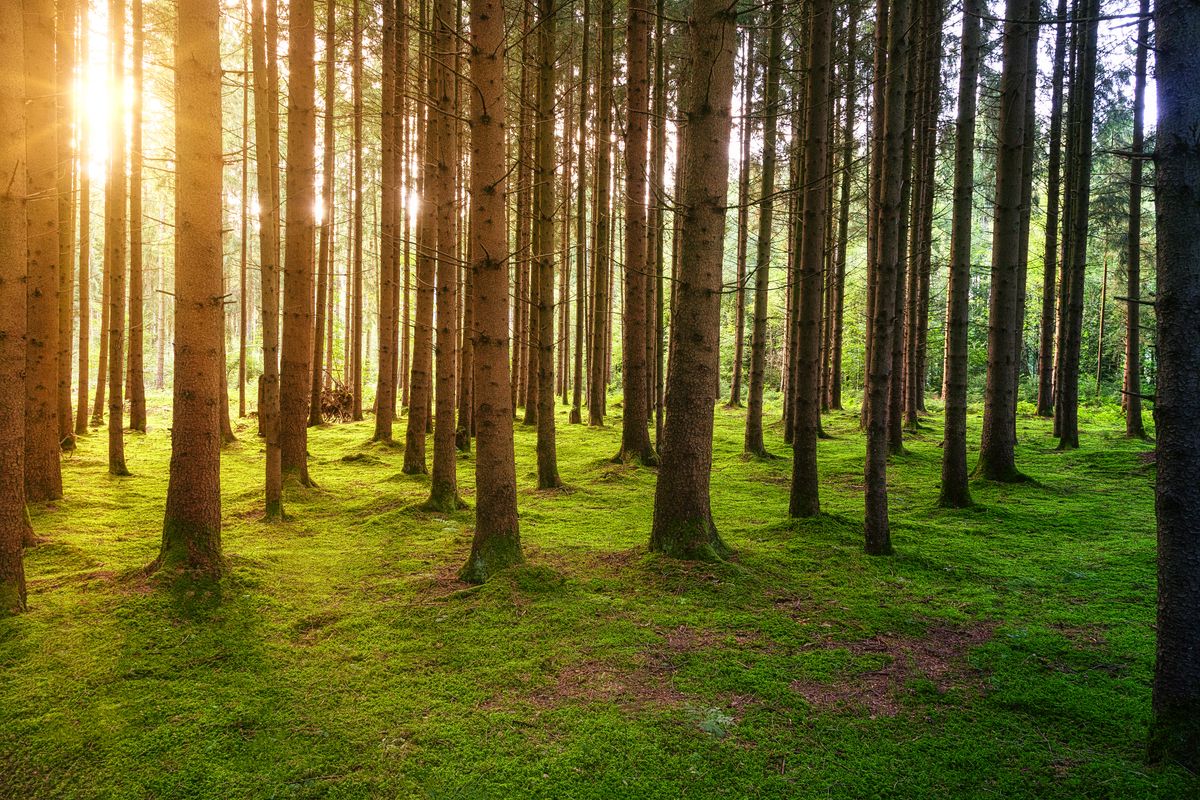
A forest is not a collection of trees. A coral reef is not a collection of corals. A meadow is not a collection of grasses. Each is an ecosystem: a community of living things interacting with each other and with the non-living environment around them — the soil, the water, the air, the sunlight, and the climate. Understanding how ecosystems work is understanding how life on Earth sustains itself, and why it is so vulnerable to disruption.
This guide explains ecosystems from first principles. It covers what an ecosystem is, how energy flows through it, how nutrients are recycled, the difference between a food chain and a food web, the roles that different organisms play, how ecosystems change over time, why biodiversity matters, and what happens when an ecosystem is damaged. It is written for a reader with no background in ecology, and it avoids inventing specific figures or dates.
What Is an Ecosystem?
An ecosystem is a community of organisms — plants, animals, fungi, and microbes — together with the physical environment they inhabit, functioning as a unit. The term covers systems of every size: a pond, a forest, a coral reef, a desert, a single rotting log. What makes an ecosystem an ecosystem, rather than a mere collection of organisms, is the interactions: organisms eat each other, compete with each other, help each other, and alter their environment, and the environment in turn shapes which organisms can live there.
Ecosystems have two kinds of components. The biotic components are the living things. The abiotic components are the non-living factors: sunlight, temperature, water, air, soil, and minerals. The two are inseparable. A forest’s soil determines which trees can grow; the trees determine the soil’s moisture and chemistry; the animals that live in the trees spread seeds and nutrients; and the microbes in the soil break down dead matter and return nutrients to the trees. Change any one part, and the effects ripple through the rest.
Ecosystems, Habitats, and Biomes
It helps to distinguish three related terms. A habitat is the place where a particular organism lives — the habitat of a frog might be a pond, and the habitat of an oak tree might be a woodland. An ecosystem is the community of organisms in an area plus their environment. A biome is a large-scale ecosystem type defined by its climate and its characteristic organisms: tropical rainforest, temperate forest, grassland, desert, tundra, and so on. A single biome, such as temperate forest, contains many individual ecosystems, each with its own particular mix of species.
Energy: The Fuel of Every Ecosystem
Every ecosystem runs on energy, and almost all of that energy comes from the Sun. The story of an ecosystem is, in large part, the story of how solar energy is captured, transferred, and eventually lost.
Producers: Capturing Sunlight
Producers are the organisms that capture energy from the environment and turn it into living tissue. On land, the producers are plants; in water, they are algae and photosynthetic microbes. Through photosynthesis, producers use sunlight, water, and carbon dioxide to make sugars, which they use to grow and to store energy. Producers are the foundation of every ecosystem, because every other organism depends, directly or indirectly, on the energy they capture.
The total amount of energy captured by producers in an area over a given time is called primary productivity. It varies enormously: a tropical rainforest or a coral reef is highly productive, while a desert or the open ocean is far less so. Primary productivity is limited by sunlight, water, temperature, and nutrients. Where any of these is scarce, productivity is low.
Consumers: Eating and Being Eaten
Consumers are organisms that obtain energy by eating other organisms. Herbivores eat producers. Carnivores eat other consumers. Omnivores eat both. Decomposers — fungi and bacteria — break down dead organisms and waste, returning nutrients to the soil and water. Scavengers eat dead animals. Parasites live on or in other organisms, taking energy from them without killing them outright.
Consumers are organised into trophic levels — feeding levels. The producers form the first trophic level. Herbivores form the second. Carnivores that eat herbivores form the third, and so on. At each level, most of the energy is lost: the organism uses energy to move, to grow, to reproduce, and to stay warm, and much of it is lost as heat. Only a small fraction — roughly a tenth — is passed on to the next level. That is why there are always more plants than herbivores, and more herbivores than carnivores, and why top predators are rare.
Decomposers: The Recyclers
Decomposers are often overlooked, but they are essential. Without them, dead matter would accumulate, nutrients would be locked away, and producers would run out of the raw materials they need. Fungi and bacteria break down dead leaves, fallen trees, animal waste, and carcasses, releasing nutrients such as nitrogen and phosphorus back into the soil and water. Earthworms, woodlice, and other detritivores help by breaking dead matter into smaller pieces. Decomposition is the process that closes the loop, turning the end of one organism into the beginning of another.
Food Chains and Food Webs
A food chain is a simple linear sequence: grass is eaten by a rabbit, the rabbit is eaten by a fox. It is a useful simplification, but real ecosystems are not chains; they are webs. Most organisms eat more than one thing, and most are eaten by more than one predator. A fox eats rabbits, mice, birds, and berries. A rabbit eats many kinds of plant. The result is a food web: a tangled network of feeding relationships.
Food webs are more stable than food chains, because they offer alternatives. If one prey species declines, a predator that eats several species can switch to another. But food webs also transmit shocks: if a key species collapses, the effects can ripple through the web in unexpected directions, affecting species that seem unrelated. This is why the removal of a top predator, or the introduction of an invasive species, can transform an entire ecosystem.
Keystone Species
Some species have an influence far larger than their abundance would suggest. These are called keystone species, after the keystone in an arch, which holds the whole structure together. Sea otters, for example, eat sea urchins, which eat kelp. Where otters are present, urchin numbers are controlled and kelp forests thrive, providing habitat for many other species. Where otters are absent, urchins multiply, kelp is overgrazed, and the ecosystem collapses into a barren landscape. The otter is not the most numerous animal in the kelp forest, but it is the one that holds the system together.
Beavers are another keystone species: by building dams, they create ponds and wetlands that support a wide range of species. Wolves, reintroduced to some areas after long absences, have been observed to change the behaviour of deer, which changes the vegetation, which changes the rivers — a cascade of effects that illustrates how interconnected an ecosystem is.
Nutrient Cycles: Nature’s Recycling
Energy flows through an ecosystem in one direction — from the Sun, through producers and consumers, and out as heat. Nutrients, by contrast, are recycled. The same atoms of carbon, nitrogen, and phosphorus are used again and again.
The Carbon Cycle
Carbon is the backbone of life. Plants absorb carbon dioxide from the air and turn it into organic matter. Animals eat plants and release carbon dioxide when they breathe. Decomposers release carbon when they break down dead matter. The oceans absorb and release carbon dioxide. Over long timescales, carbon is stored in soils, in fossil fuels, and in rocks. Human activity has disrupted this cycle by burning fossil fuels and clearing forests, adding carbon dioxide to the atmosphere faster than natural processes can remove it.
The Nitrogen Cycle
Nitrogen is essential for building proteins and DNA, but most organisms cannot use nitrogen gas directly from the air, even though it makes up most of the atmosphere. Specialised bacteria fix nitrogen — converting it into forms that plants can use. Other bacteria convert nitrogen compounds back into gas. Lightning also fixes nitrogen. Human activity has greatly increased the amount of reactive nitrogen in the environment, through fertiliser use and the burning of fossil fuels, which has enriched soils and waters in ways that can harm ecosystems, causing algal blooms and dead zones in lakes and coastal seas.
The Water Cycle
Water moves continuously between the oceans, the atmosphere, and the land. It evaporates from oceans and lakes, falls as rain or snow, flows through rivers, and is taken up by plants and released back into the air through transpiration. Ecosystems depend on this cycle, and they also shape it: forests recycle rainfall, wetlands store floodwater, and vegetation prevents soil erosion. When ecosystems are damaged — when a forest is cleared or a wetland is drained — the water cycle changes, often with consequences for people as well as wildlife.
How Ecosystems Change Over Time
Ecosystems are not static. They change over days, seasons, years, and centuries. Understanding that change is essential to understanding how they work.
Succession
Succession is the process by which an ecosystem develops over time. After a disturbance — a fire, a flood, a volcanic eruption, or the retreat of a glacier — bare ground is colonised first by pioneer species, such as lichens and hardy plants, which can survive in harsh conditions. These species change the environment, adding organic matter to the soil and providing shelter, which allows other species to establish themselves. Over time, the community becomes more complex, until it reaches a relatively stable state called a climax community. Succession can take decades or centuries, and it can be reset by a new disturbance.
Disturbance and Resilience
Disturbance is a normal part of ecosystem life. Fires, storms, floods, and droughts are not only destructive; they are also regenerative. Many ecosystems depend on periodic disturbance: some pine forests need fire to release their seeds, and floodplains need flooding to deposit nutrients. An ecosystem’s resilience is its ability to recover from disturbance. Resilient ecosystems absorb shocks and return to their previous state; less resilient ones may shift to a different state — a forest becoming a grassland, or a coral reef becoming dominated by algae — and may not recover.
The Balance of Nature
The phrase “balance of nature” is often used to suggest that ecosystems are stable and harmonious. The reality is more dynamic. Ecosystems are constantly changing, populations rise and fall, and species come and go. What is true is that ecosystems have feedbacks that tend to keep them within certain bounds: predators limit prey, prey limit predators, and competition limits the growth of any single species. When those feedbacks are disrupted — by the removal of a predator, the introduction of a new species, or a change in climate — the system can change rapidly.
Why Biodiversity Matters
Biodiversity is the variety of life in an ecosystem: the number of species, the genetic variety within species, and the variety of ecosystems themselves. It matters for several reasons.
First, biodiversity makes ecosystems more resilient. An ecosystem with many species is more likely to contain species that can survive a drought, a disease, or a change in temperature, and to keep functioning when conditions change. Second, biodiversity supports the services ecosystems provide to people: clean water, pollination, fertile soil, timber, fish, and medicines. Third, biodiversity has intrinsic value: many people believe that other species have a right to exist, independent of their usefulness to us. And fourth, biodiversity is a source of discovery: many medicines, materials, and ideas have come from studying organisms that were previously unknown or little understood.
The loss of biodiversity — the decline in the number and variety of species — is one of the great environmental challenges of our time. It is driven by habitat destruction, pollution, overexploitation, invasive species, and climate change. Each species lost is a thread removed from the web, and the web becomes weaker with every loss.
What Happens When an Ecosystem Is Damaged
Ecosystems can absorb some damage, but they have limits. Habitat destruction — clearing a forest, draining a wetland, paving over a meadow — removes the living space on which species depend, and it is the largest driver of biodiversity loss. Pollution — chemicals, plastics, excess nutrients — poisons organisms and alters the chemistry of soil and water. Overfishing and overhunting remove species faster than they can reproduce. Invasive species, introduced by human activity, outcompete native species that have no defences against them. And climate change shifts temperatures and rainfall patterns faster than many species can adapt or move.
The effects are often delayed and indirect. A forest cleared today may lose its soil to erosion over years. A lake enriched with fertiliser may take years to develop an algal bloom. A species driven to low numbers may persist for a while before disappearing. This lag makes it easy to underestimate damage, and it is a reason to act before the consequences are fully visible.
Restoration
Ecosystems can recover, and restoration ecology is the science of helping them do so. Restoration may involve replanting native vegetation, removing invasive species, restoring water flows, or reintroducing a missing species. It is slow, expensive, and uncertain — it is far easier to protect an ecosystem than to restore one — but it can work. Wetlands have been restored, forests have regrown, and rivers have been brought back to life. The lesson is that protection is the priority, and restoration is the second-best option.
How to Observe an Ecosystem Yourself
You can study ecosystems without leaving your neighbourhood. Choose a small area — a garden, a park, a pond, a patch of woodland — and visit it regularly through the seasons. Note which plants grow there, which animals visit, and how the place changes. Look under a log, and you will find a community of decomposers. Watch a patch of flowers, and you will see pollinators at work. Follow a food web: which insects eat which plants, which birds eat which insects?
Keep a simple record: the date, the weather, what you saw, and what had changed since your last visit. Over a year, you will build a picture of an ecosystem in action — its seasons, its species, and its changes. It is the same method ecologists use, on a smaller scale.
A Beginner’s Ecosystem Checklist
- Identify the producers: which plants and algae capture sunlight here?
- Identify the consumers: which herbivores, carnivores, and omnivores are present?
- Look for decomposers: fungi, bacteria, earthworms, and woodlice.
- Trace one food chain, then expand it into a food web.
- Note the abiotic factors: sunlight, water, soil, temperature.
- Visit in different seasons and record what changes.
- Look for signs of disturbance and recovery.
Frequently Asked Questions
What is the difference between a food chain and a food web?
A food chain is a single linear sequence of who eats whom. A food web is the full network of feeding relationships in an ecosystem, in which most organisms eat several things and are eaten by several predators. Real ecosystems are webs, not chains.
Why are there fewer top predators than plants?
Because energy is lost at each trophic level. Only a small fraction of the energy captured by producers reaches herbivores, and only a small fraction of that reaches carnivores. There is simply not enough energy to support many top predators.
What is a keystone species?
A keystone species is one whose influence on its ecosystem is much larger than its abundance would suggest. Removing it causes disproportionate change. Sea otters, beavers, and wolves are well-known examples.
Do ecosystems need predators?
Yes, in most cases. Predators control the numbers of herbivores, which prevents overgrazing and allows vegetation to recover. Removing predators often leads to an explosion of herbivores and a collapse of the plant community, with knock-on effects for the whole ecosystem.
What is biodiversity, and why does it matter?
Biodiversity is the variety of life at all levels: species, genes, and ecosystems. It matters because it makes ecosystems more resilient, supports the services ecosystems provide to people, and has value in its own right.
Can a damaged ecosystem recover?
Often, yes, given time and the removal of the pressure that caused the damage. But recovery is slow, and some changes are effectively irreversible. Protecting ecosystems is far more effective than restoring them after the fact.
What is the largest ecosystem on Earth?
The ocean is the largest ecosystem, covering most of the planet’s surface. Within it, the open ocean, coral reefs, and coastal ecosystems are distinct and important. On land, forests are among the most extensive and productive ecosystems.
How do humans fit into ecosystems?
Humans are part of ecosystems, not separate from them. We depend on the same flows of energy and nutrients as every other species: we eat producers and consumers, we drink water, we breathe air, and we rely on decomposers to recycle waste. The difference is the scale of our impact. No other species alters ecosystems as rapidly or as widely as we do, through land use, pollution, and climate change. Recognising that we are inside the web, not outside it, is the first step toward managing our impact wisely.
Key Takeaways
- An ecosystem is a community of organisms plus their physical environment, functioning as a unit.
- Energy flows from the Sun through producers and consumers and is lost as heat; nutrients are recycled.
- Food webs, not food chains, describe real feeding relationships.
- Decomposers close the loop by returning nutrients to the soil and water.
- Keystone species have an outsized influence on their ecosystems.
- Ecosystems change through succession and disturbance, and their resilience depends on biodiversity.
- Protecting ecosystems is more effective than restoring them after damage.
Conclusion
An ecosystem is a web of relationships — between organisms and each other, and between organisms and their environment — held together by the flow of energy and the cycling of nutrients. It is a system in which every part affects every other part, and in which the whole is more than the sum of its parts. Understanding how ecosystems work is not only an intellectual pleasure; it is a practical necessity, because our lives depend on the services ecosystems provide, and our actions are reshaping them at a speed they have rarely experienced before. The more clearly we understand them, the better our chances of keeping them — and ourselves — healthy.