Choosing a fuel type is one of the most consequential decisions when you buy a car, because it affects what the car costs to run, how it drives, where you can refuel or charge, how it performs in different conditions, and how long it will remain a sensible choice as regulations and fuel prices change. Ten years ago, the choice was mostly between petrol and diesel. Today, hybrid and electric cars have made the decision more complex, and more interesting, because each fuel type has genuine strengths and genuine drawbacks, and the right answer depends on how you drive, where you live, and what you value.
This guide compares petrol, diesel, hybrid and electric cars on the factors that matter most: purchase price, running costs, range and refuelling, driving experience, maintenance, emissions, and future-proofing. It does not declare a single winner, because there is not one. A diesel car that is perfect for a driver who covers 25,000 motorway miles a year would be a poor choice for a driver who makes short town journeys. An electric car that is ideal for a driver with a driveway and a short commute would be frustrating for a driver without home charging who tows a caravan. The goal is to give you a framework for matching the fuel type to your life, so you can choose with confidence and avoid the most common mistakes.
Petrol: Simple, Flexible and Familiar
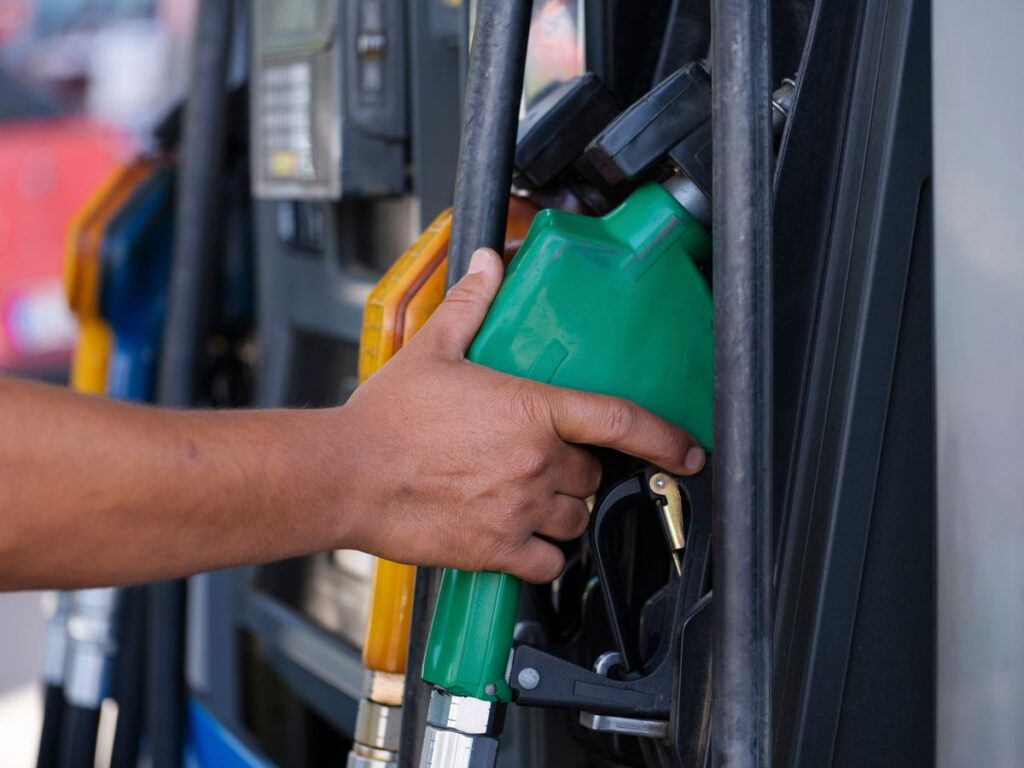
A petrol car burns petrol in an internal combustion engine, which turns the wheels through a gearbox. It is the most familiar fuel type, the easiest to understand, and the most flexible in terms of refuelling: petrol stations are everywhere, refuelling takes a few minutes, and the range is usually several hundred miles. Petrol cars are generally cheaper to buy than diesel, hybrid or electric cars of the same size, and they are often quieter and smoother than diesel cars, especially at low speeds and in town driving.
Petrol suits drivers who do low to moderate mileage, who make mostly short or mixed journeys, and who want a simple, affordable car without having to think about charging or about diesel-specific maintenance. A small petrol hatchback is often the cheapest car to buy and run for a driver who covers fewer than 10,000 miles a year, because the lower purchase price outweighs the higher fuel cost per mile. Petrol cars also suit drivers who live in areas without reliable charging, who need a car that can be refuelled anywhere, and who want a wide choice of models at every price point.
The drawbacks are running costs and emissions. Petrol is usually more expensive per mile than diesel for high-mileage drivers, because petrol engines are less efficient than diesel engines at converting fuel into motion, especially on long motorway journeys. Petrol cars produce carbon dioxide and other pollutants, and while modern petrol cars are far cleaner than older ones, they still produce exhaust emissions. For high-mileage drivers, the fuel cost gap can be significant over a year, and for drivers in cities with low-emission zones, a petrol car may face restrictions or charges that an electric car would not, depending on local rules. Any specific charge or restriction should be checked against the current local rules and marked [TBD — verify before publishing] if it cannot be verified.
Diesel: Efficient on Long Journeys, Less Suited to Short Trips
A diesel car burns diesel fuel in a compression-ignition engine, which is more efficient than a petrol engine, especially at steady motorway speeds. That efficiency means a diesel car can travel further on a tank of fuel than a petrol car of the same size, and it can be significantly cheaper per mile for high-mileage drivers. Diesel engines also produce strong torque at low revs, which makes them good for towing, for carrying heavy loads, and for driving a large car or SUV.
Diesel suits drivers who cover high mileage, especially on motorways and major roads, who tow a trailer or caravan, or who drive a large car where the efficiency advantage is greatest. A driver who covers 20,000 miles a year or more, mostly on long journeys, will often save enough on fuel to outweigh the higher purchase price and higher servicing costs of a diesel car. Diesel cars also have a long range between refuels, which is convenient for drivers who do not want to stop often.
The drawbacks are significant for the wrong driver. Diesel cars are usually more expensive to buy than petrol cars, and they can be more expensive to maintain, because they have complex emissions systems, including particulate filters and systems that reduce nitrogen oxides, which can be costly to repair if they fail. Those systems are designed for long, hot journeys that allow them to regenerate and clean themselves. Short town journeys, where the engine does not get hot enough, can cause problems with the particulate filter, leading to warning lights, reduced performance, and expensive repairs. Diesel cars are also noisier and less smooth than petrol cars at low speeds, and they produce nitrogen oxides and particulates that are a concern for air quality in towns and cities. In many cities, diesel cars face higher charges or restrictions than petrol cars, and that trend is likely to continue.
Hybrid: Petrol With Electric Assistance
A hybrid car, in the sense used here, is a car that has both a petrol engine and an electric motor, with a battery that is charged by the engine and by regenerative braking, not by plugging in. The electric motor assists the engine, especially at low speeds and in town driving, where it can drive the car on its own for short distances, and it recovers energy when you brake. The result is a car that uses less fuel than a petrol car, especially in town, without needing to be plugged in.
Hybrids suit drivers who want lower fuel costs and lower emissions than a petrol car, but who do not want to worry about charging, or who cannot charge at home. They are particularly good for town driving and for drivers who make many short journeys, because that is where the electric motor does most of its work. A hybrid can be significantly more economical than a petrol car in stop-start traffic, where a petrol engine is at its least efficient. Hybrids also suit drivers who want a car that feels familiar to drive and refuel, because you refuel a hybrid at a petrol station in the same way as a petrol car, and you never have to think about range or charging.
The drawbacks are that a hybrid is usually more expensive to buy than a petrol car, and its fuel saving is smaller on long motorway journeys, where the petrol engine does most of the work and the electric motor contributes less. A hybrid still produces exhaust emissions, and its battery is smaller than a plug-in hybrid or electric car’s battery, so it cannot drive on electric power alone for more than a very short distance. Maintenance can be slightly more complex than a petrol car, because there are two power sources, though in practice hybrids are often reliable and their brakes last longer because of regenerative braking. For a driver who does mostly motorway driving, the extra cost of a hybrid may not pay back in fuel savings, and a diesel or an efficient petrol car may be a better choice.
Plug-in Hybrid: Electric for Short Trips, Petrol for Long Ones
A plug-in hybrid, or PHEV, is a hybrid that can be plugged in to charge its larger battery, and that can drive on electric power alone for a meaningful distance, often enough for a daily commute, before the petrol engine takes over. A PHEV offers the best of both worlds in theory: electric driving for short trips, with low running costs and no exhaust emissions while driving on electricity, and petrol driving for long trips, with the range and refuelling convenience of a petrol car.
A PHEV suits a driver who has a short daily commute that can be covered on electric power, who can charge at home overnight, and who also makes longer journeys where the petrol engine is useful. For that driver, a PHEV can be very economical, because most of their driving is electric, and they rarely use petrol. It also suits a driver who wants to try electric driving without committing to a fully electric car, or who lives in an area where public charging is limited but who can charge at home.
The drawbacks are that a PHEV is usually more expensive to buy than a hybrid or petrol car, heavier because it carries both a battery and an engine, and more complex to maintain. Its benefit depends entirely on actually plugging it in regularly. A PHEV that is rarely charged is essentially a heavier petrol car, and it will not save fuel or emissions. It will also have a shorter electric range than a fully electric car, and its petrol engine will be less efficient than a dedicated petrol car when it is running, because it is carrying the weight of the battery and motor. If you cannot charge at home, or if your daily driving is mostly long journeys, a PHEV is unlikely to be the best choice.
Electric: Cheapest to Run, With Charging to Plan
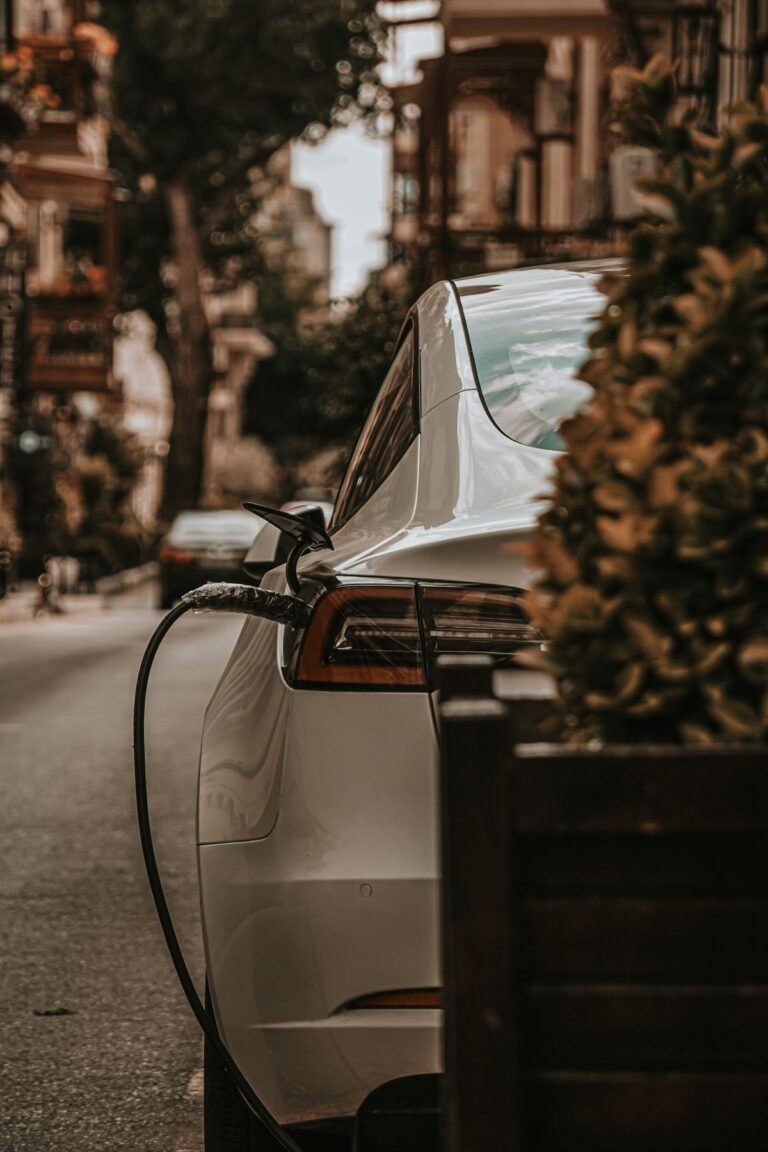
A battery electric car, or BEV, has only a battery and an electric motor, and it is charged by plugging in. It produces no exhaust emissions while driving, it is usually the cheapest to run per mile if you charge at home, it needs less routine servicing than a petrol or diesel car, and it is quiet, smooth, and quick to accelerate. For a driver who can charge at home, who drives mostly short to medium journeys, and who wants the lowest running costs and the simplest driving experience, an electric car is often the best choice.
Electric cars suit drivers with a driveway or reliable workplace charging, with a daily mileage that is well within the car’s range, and with a willingness to plan long journeys around charging stops. They are particularly good for town driving, where regenerative braking recovers energy and where the lack of exhaust emissions matters most for air quality. They are also good for drivers who value quiet, smooth driving, and who want to reduce their fuel costs significantly.
The drawbacks are purchase price, charging, and range. Electric cars usually cost more to buy than petrol or diesel cars of the same size, though that gap is narrowing and the total cost over several years can be lower, especially for high-mileage drivers who charge at home. Charging takes longer than refuelling, and it requires planning, especially on long journeys or if you cannot charge at home. Range is lower than a petrol or diesel car, and it falls in cold weather and at high motorway speeds. Insurance can be higher for some electric cars, and repair costs can be higher if the battery is damaged. For a driver without home charging, or who regularly drives very long distances without breaks, or who tows heavy loads over long distances, an electric car may be less convenient than a petrol, diesel, or hybrid car, though the charging network and the range of electric cars are improving rapidly.
Running Costs Compared
Running costs are where the fuel types differ most, and they are also where a simple comparison can be misleading, because the cost per mile depends on your mileage, your driving pattern, and where you refuel or charge. As a general pattern, electric cars are cheapest per mile if you charge at home on a suitable tariff, followed by diesel for high-mileage motorway drivers, hybrid for town drivers, and petrol for low-mileage drivers. But the purchase price reverses that order: petrol cars are usually cheapest to buy, followed by hybrid, diesel, and electric, though the gap varies by model and by market.
To compare fairly, calculate the total cost of ownership over the period you plan to keep the car, including purchase price or finance cost, fuel or electricity, insurance, servicing, tyres, tax where applicable, and depreciation or resale value. Use your actual mileage and driving pattern, not an average, and use real quotes for insurance and for electricity or fuel. A driver who covers 5,000 miles a year will rarely save enough on fuel to justify the extra purchase price of a diesel or electric car. A driver who covers 25,000 miles a year, mostly on motorways, may save enough to make a diesel or electric car cheaper overall, even though it costs more to buy. A driver who covers 15,000 miles a year in town may find a hybrid is the cheapest overall, because it saves fuel where it matters most.
Driving Experience Compared
Driving experience is subjective, but the differences are real. Petrol cars are familiar, smooth, and responsive, with a wide range of engines and gearboxes to choose from. Diesel cars feel strong and relaxed on a motorway, with good torque for towing and for carrying loads, but they can feel noisy and sluggish in town. Hybrids feel smooth and quiet in town, where the electric motor does much of the work, and they feel like a petrol car on a motorway. Electric cars feel instant, quiet, and smooth everywhere, with strong acceleration from a standstill, no gear changes, and a low centre of gravity that helps handling. They also have regenerative braking, which takes a little getting used to but which many drivers find intuitive and relaxing.
The best way to understand these differences is to test drive cars of each fuel type on the same route, including town driving, a faster road, and a bumpy road. Pay attention to noise, vibration, acceleration, braking, and how the car feels when you lift off the accelerator. A car that feels good on a short test drive may feel different after an hour, so if you can, take a longer test drive, and bring the people and luggage you normally carry. Your experience matters more than any review, because you are the person who will live with the car every day.
Emissions and Future-Proofing
Emissions and future regulations are important considerations, because they affect not only the environment but also the cost and the usability of the car over the years you will own it. Electric cars produce no exhaust emissions while driving, and their total emissions depend on how the electricity they use is generated. Hybrids produce lower emissions than petrol cars, especially in town. Diesel cars produce lower carbon dioxide than petrol cars, but higher nitrogen oxides and particulates, which are a concern for air quality. Petrol cars produce carbon dioxide and other pollutants, but modern petrol cars are far cleaner than older ones.
Regulations are changing in many countries, with low-emission zones in cities, higher charges for more polluting cars, and future bans or restrictions on the sale of new petrol and diesel cars. The exact rules and dates vary by country and city, and they change over time, so any specific date or ban should be checked against the current official source and marked [TBD — verify before publishing] if it cannot be verified. As a general principle, electric cars are the most future-proof, followed by hybrids, then petrol, then diesel, in terms of likely restrictions in cities. That does not mean a petrol or diesel car is a bad choice today, especially if you live outside a city and drive long distances, but it does mean you should consider how long you plan to keep the car, where you will drive it, and whether future restrictions could affect its resale value or its usability.
A Decision Framework
To choose a fuel type, start with your driving pattern, not with the car. Log your driving for a week or two, and note your daily mileage, your longest regular journey, how much of your driving is in town versus on a motorway, and whether you can charge at home or at work. Then ask: can I charge at home? If yes, an electric car becomes a strong option, especially if your daily mileage is modest. If no, can I charge reliably at work or nearby? If not, a hybrid or petrol car may be more convenient. How many miles do I cover each year? If it is high and mostly on motorways, diesel or electric may be cheapest. If it is low, petrol may be cheapest. Do I tow? If yes, diesel or a large electric car with towing capacity may be best, but check the towing limit for any electric car you consider, because it varies widely. Do I drive mostly in town? If yes, hybrid or electric will save the most fuel and produce the lowest emissions.
Use that framework to narrow the choice to one or two fuel types, then compare models within those types on price, space, equipment, safety, and total cost. Test drive at least one car of each fuel type on your shortlist, and get insurance quotes and, for electric cars, charging quotes, before you decide. The right fuel type is not the one that is most popular, or the one that a review praises most highly. It is the one that fits your driving, your charging or refuelling options, your budget, and your plans for how long you will keep the car.
Frequently Asked Questions
Which fuel type is cheapest to run? It depends on your mileage and where you charge or refuel. Electric cars are usually cheapest per mile if you charge at home, diesel is often cheapest for high-mileage motorway drivers, hybrid is often cheapest for town drivers, and petrol is often cheapest for low-mileage drivers when you include the purchase price. Calculate the total cost for your own driving, not just the fuel cost.
Is diesel bad for short journeys? Diesel cars are less suited to short town journeys, because their emissions systems need long, hot journeys to work properly, and short journeys can cause problems with the particulate filter. If most of your driving is short town trips, a petrol, hybrid, or electric car is usually a better choice.
Do I need to charge a hybrid? A conventional hybrid does not need to be plugged in; its battery is charged by the engine and by regenerative braking. A plug-in hybrid does need to be plugged in to get its full benefit, because its electric range comes from charging the battery from the grid. A plug-in hybrid that is rarely charged will not save fuel.
Are electric cars good for long journeys? Yes, with planning. Electric cars can cover long journeys using rapid chargers, with breaks of 20 to 40 minutes to charge to about 80 percent. The experience is different from a petrol car, because you plan stops around charging, but for many drivers the breaks are welcome. If you regularly drive very long distances without breaks, or you tow heavy loads, check the car’s range and charging speed carefully before you choose.
Will petrol and diesel cars be banned? Many countries have announced future restrictions on the sale of new petrol and diesel cars, and many cities have low-emission zones that charge or restrict more polluting cars. The exact rules and dates vary and change over time, so check the current official source for your country and city before relying on a specific date. Existing petrol and diesel cars will generally remain usable for many years, but their resale value and their access to some cities may be affected.